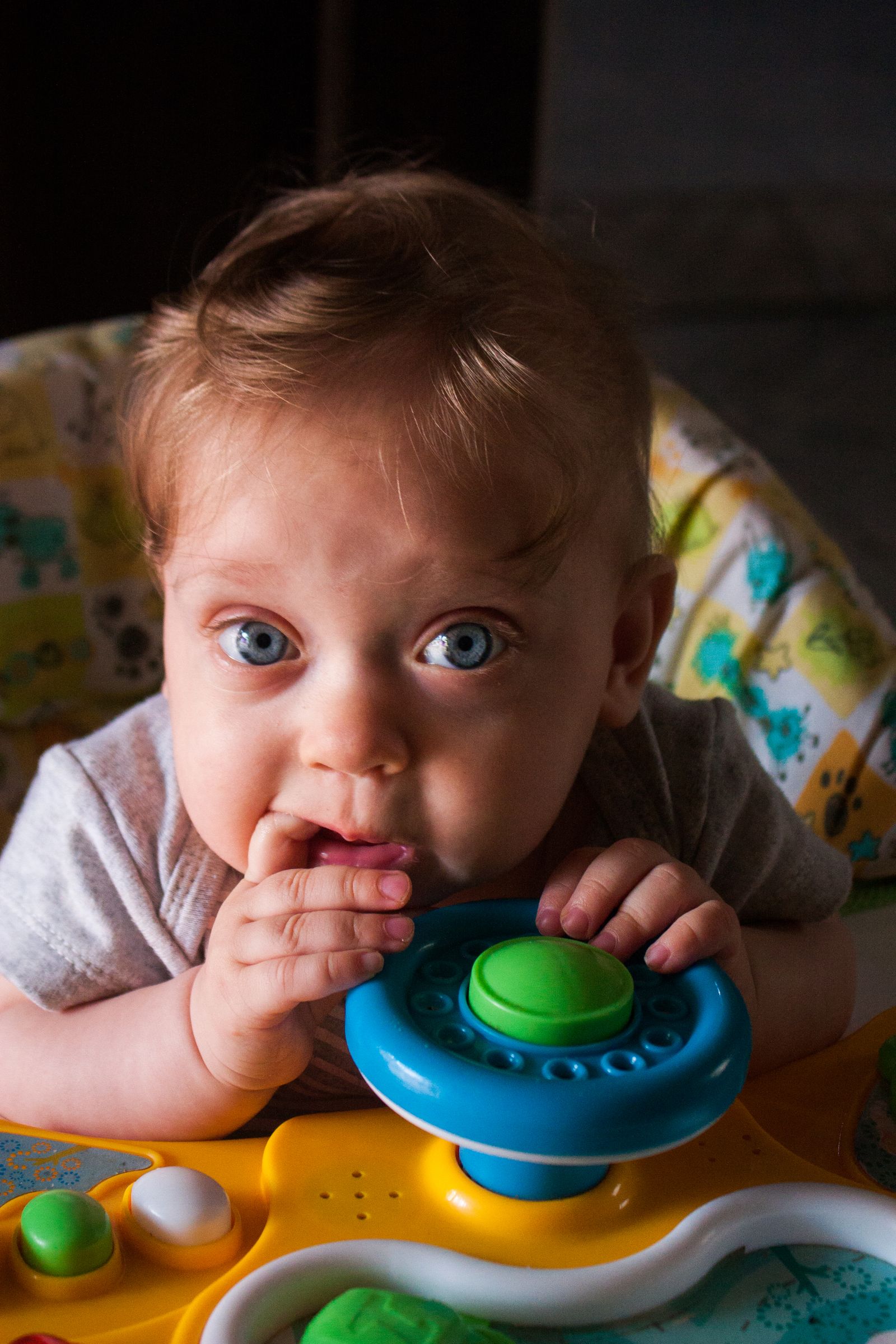
How scientists ask a baby about color
They place color beside gray and watch where babies look
- Because a baby cannot name a color, researchers placed a colored patch beside a gray one and watched where the baby looked.
- They repeated the comparison at several brightness levels. This helped separate color detection from a simple response to light and dark.
- Later studies compared colors with one another as babies grew.
As your baby grows
More colors begin to look different from one another
- In a 1994 study, 74% of the newborns distinguished a large red patch from gray across the tested brightness levels.
- Responses to blue, green, and yellow were less consistent in that study.
- At one month, babies in another study could tell red from green. They could not yet reliably separate both colors from yellow.
- At two and three months, babies began telling more colors apart.
- A 2022 review found that your baby’s experience of color keeps changing quickly throughout the first six months.
For cards and toys
Begin with contrast, then add color
- Black and white is a clear starting point because the difference between light and dark is easy for your newborn to find.
- You can add a small area of vivid red early on. Let its brightness or shape help it stand apart from the background.
- Color labels by age are broad starting points, not a test your baby has to pass.
Keep in mind
One color test cannot describe every baby
- A percentage from a group study cannot tell you exactly what your newborn will notice.
- Noticing a large red patch in a study does not mean your newborn sees every red object clearly.
- The studies do not show that adding color improves development or that more colors are better.